By clicking “Accept,” you agree to the use of cookies and similar technologies on your device as set forth in our Cookie Policy and our Privacy Policy. Please note that certain cookies are essential for this website to function properly and do not require user consent to be deployed.
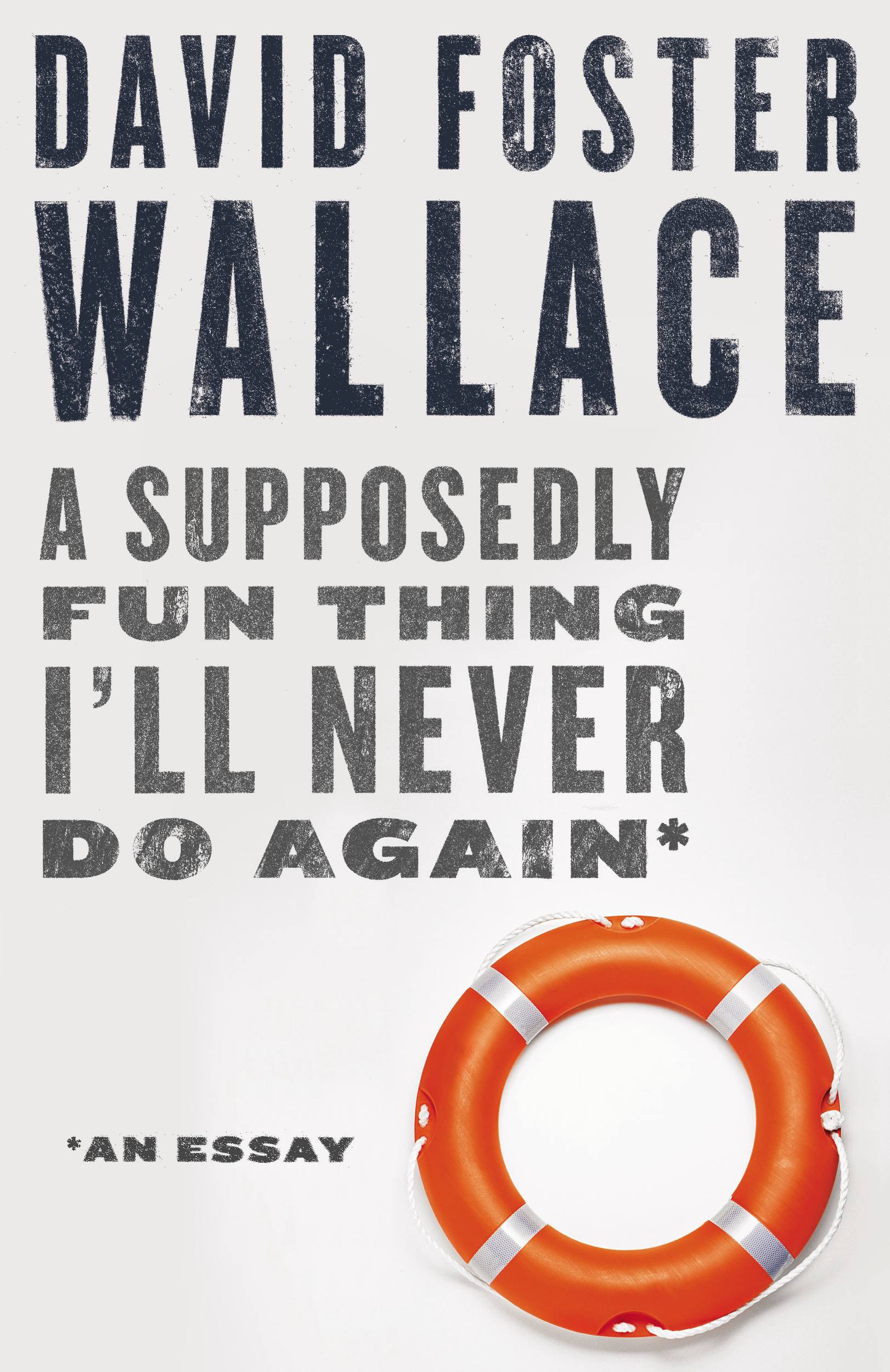
A Supposedly Fun Thing I’ll Never Do Again: An Essay (Digital Original)

Contributors
Formats and Prices
- On Sale
- Apr 1, 2012
- Page Count
- 368 pages
- Publisher
- Little, Brown and Company
- ISBN-13
- 9780316224765
Price
$2.99Price
$3.99 CADFormat
Format:
- ebook (Digital original) $2.99 $3.99 CAD
- ebook $1.99 $2.99 CAD
- Audiobook Download (Unabridged)
- Trade Paperback $19.99 $25.99 CAD
Buy from Other Retailers:
NAMED A BEST NONFICTION BOOK BY SLATE AND TIME
A collection of seven witty and incisive essays that examine the absurdities of 1990’s American culture, consumerism, and entertainment through the uniquely funny, philosophical, and relentlessly observant perspective of David Foster Wallace, bestselling author of Infinite Jest.
In this exuberantly praised book —a collection of seven essays on subjects ranging from television to tennis, from the Illinois State Fair to the films of David Lynch, from postmodern literary theory to the supposed fun of traveling aboard a Caribbean luxury cruiseliner —David Foster Wallace brings to nonfiction the same curiosity, hilarity, and exhilarating verbal facility that has delighted readers of his fiction, including the bestselling Infinite Jest.
Each essay explores a different aspect of American culture, identity, entertainment, and human behavior:
- “A Supposedly Fun Thing I’ll Never Do Again (Title Essay, originally published in Harper’s as ”Shipping Out”): A 100-page centerpiece recounting Wallace’s 7-day luxury Caribbean cruise aboard the M.V. Zenith, where mandatory pampering and artificial fun lead to intense psychological introspection and existential dread.
- “Derivative Sport in Tornado Alley”: A reflection on Wallace’s youth as a regionally ranked junior tennis player in Illinois and how he used geometry and wind to win.
- “E Unibus Pluram: Television and U.S. Fiction”: An influential essay analyzing how television shaped modern American literature and the rise of irony.
- “Greatly Exaggerated”: A philosophical and literary exploration of the debate over whether authors have meaning or authority over their own work, particularly in the context of postmodern literary criticism.
- “Getting Away from Already Being Pretty Much Away from It All (originally published in Harper’s as ”Ticket to the Fair”): An unflinching, hilarious look at the sensory overload and eccentricities of the Illinois State Fair.
- “David Lynch Keeps His Head”: An exploration of the surreal cinema of director David Lynch.
- “Tennis Player Michael Joyce’s Professional Artistry as a Paradigm of Certain Stuff about Choice, Freedom, Discipline, Joy, Grotesquerie, and Human Completeness”: Through the career of professional tennis player Michael Joyce, Wallace considers ambition, sacrifice, obsession, discipline, and what it means to dedicate your entire life to mastering something.
These widely acclaimed essays, on television, tennis, cruise ships, and more, established David Foster Wallace as one of the preeminent essayists of his generation.
Genre:
-
"The best mind of his generation"New York Times
-
"A prose magician, Mr. Wallace was capable of writing...about subjects from tennis to politics to lobsters, from the horrors of drug withdrawal to the small terrors of life aboard a luxury cruise ship, with humor and fervor and verve. At his best he could write funny, write sad, write sardonic and write serious. He could map the infinite and infinitesimal, the mythic and mundane. He could conjure up an absurd future...while conveying the inroads the absurd has already made in a country where old television shows are a national touchstone and asinine advertisements wallpaper our lives."New York Times
-
"One of the most influential writers of his generation."New York Times
-
"A novelist with the industrial-strength intellectual chops to theorize even our resolutely anti-intellectual age....Wallace's ear for dialogue was unmatched in contemporary fiction."Time